By the label
Hongo Killer by condition
Three conditions appear under Uses on Hongo Killer Drug Facts panels. Start from the one named on your pack or by your doctor.
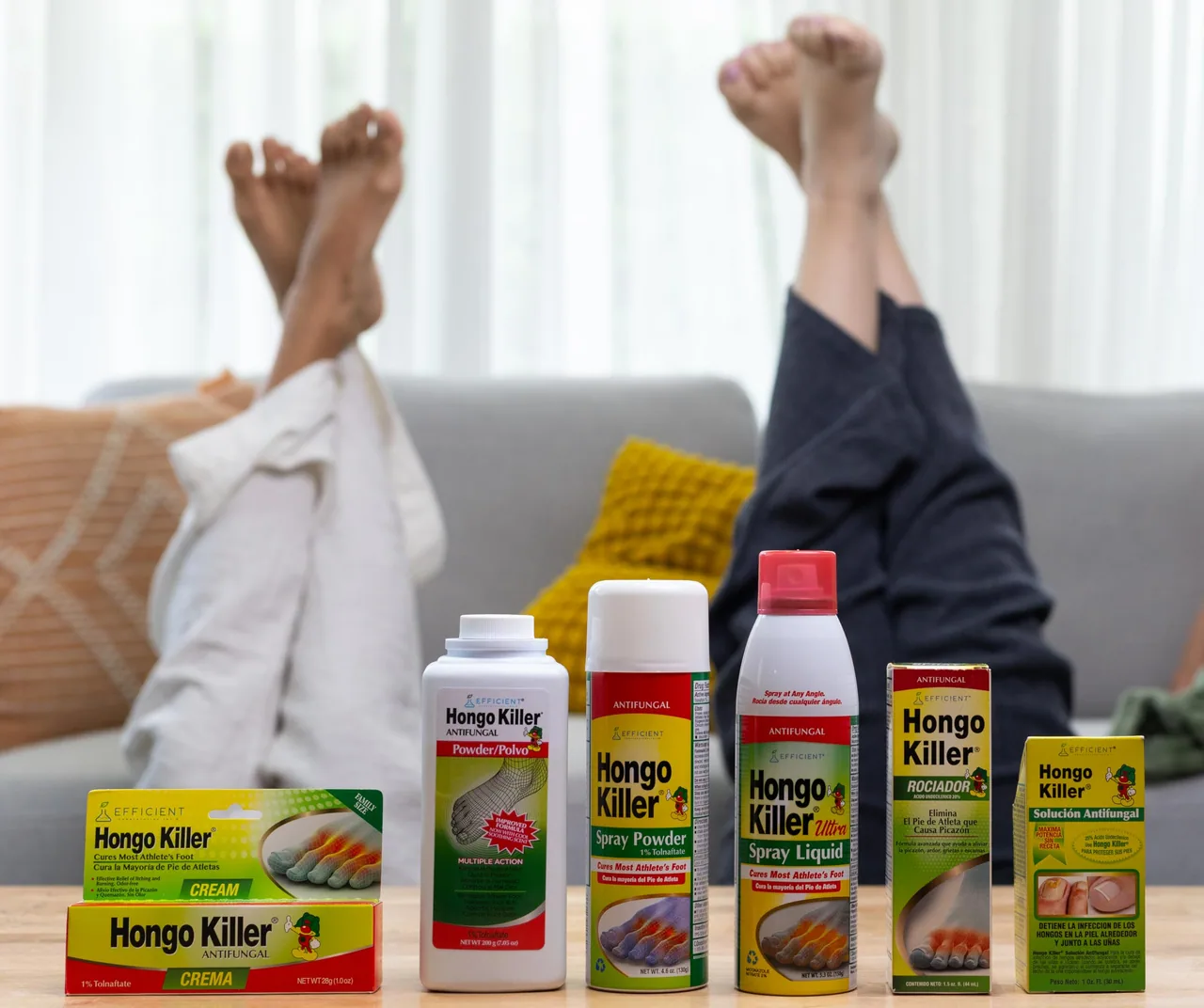
Athlete's foot
Tinea pedis: the feet and the skin between the toes.
7 products labeled for it
Jock itch
Tinea cruris: the groin and the inner thighs.
3 products labeled for it
Ringworm
Tinea corporis: ring-shaped patches on the body.
7 products labeled for it
Label by label
Which panel lists what
| Product | Active ingredient | Athlete's foot | Jock itch | Ringworm |
|---|---|---|---|---|
| Antifungal Powder | Tolnaftate 1% | Listed | Listed | Listed |
| Spray Powder | Tolnaftate 1% | Listed | Listed | Listed |
| Antifungal Spray | Undecylenic acid 20% | Listed | Not listed | Listed |
| Ultra Spray Liquid | Miconazole nitrate 2% | Listed | Listed | Listed |
| Antifungal Cream | Tolnaftate 1% | Listed | Not listed | Listed |
| Cream Family Size | Tolnaftate 1% | Listed | Not listed | Listed |
| Antifungal Solution | Undecylenic acid 25% | Listed | Not listed | Listed |
| Nail Formula | No drug ingredient | Not listed | Not listed | Not listed |
One family of infections
Three names, one kind of fungus
The three conditions on these labels are related. The CDC groups them under one heading, and the medical names on the packs follow the same pattern: tinea, then the part of the body.
Athlete's foot, jock itch, and most fungal nail infections are forms of ringworm.
Ringworm on feet (tinea pedis) is often referred to as athlete's foot. Ringworm on the groin (tinea cruris) is often called jock itch.
Questions
Three conditions, one family
Are athlete's foot, jock itch and ringworm the same thing?
They are 3 forms of one kind of skin infection. The CDC puts it this way: "Athlete's foot, jock itch, and most fungal nail infections are forms of ringworm." The place on the body gives each its name.
Sources
- Centers for Disease Control and Prevention: Ringworm Basicsread 7 October 2026
- Centers for Disease Control and Prevention: Treatment of Ringwormread 7 October 2026
- Code of Federal Regulations: 21 CFR Part 333, Subpart C: Topical Antifungal Drug Productsread 7 October 2026
This is general information, not medical advice. Read the label on the pack before use, and ask a doctor or pharmacist about your own case.